Waste As A Valuable Resource
CSIR–CRRI is Engineering Green, Resilient, and Smart Roads to Drive India’s Transition to Future-Ready Road Construction
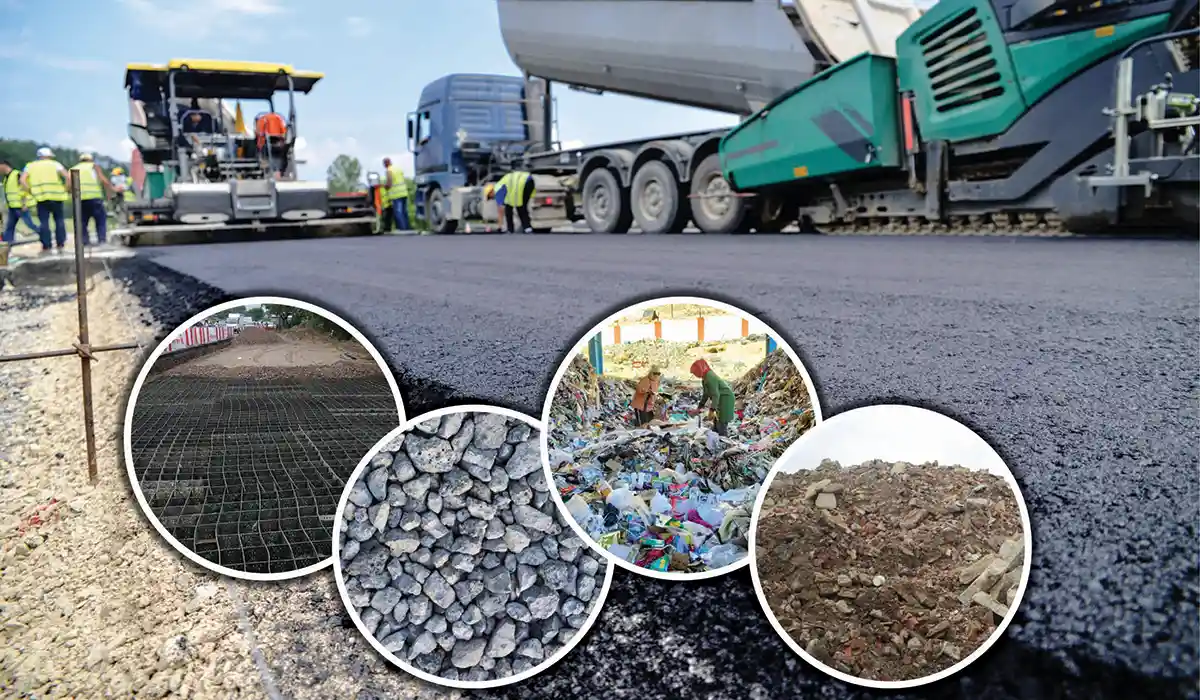
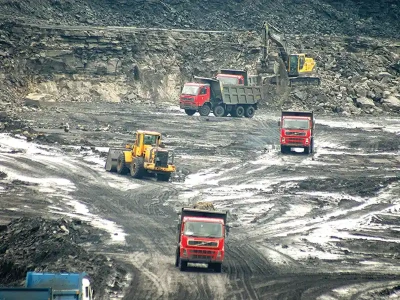
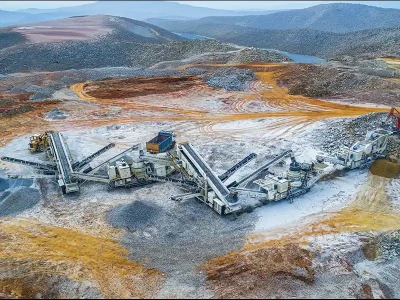
India’s rapid expansion of its road network has been central to economic growth and connectivity, linking cities, industries, and rural communities. However, this development has come at a steep environmental cost - extensive quarrying for natural aggregates, high energy consumption, and escalating carbon emissions.
Recognizing the need to balance infrastructure growth with ecological responsibility, the CSIR–Central Road Research Institute (CSIR–CRRI) has been at the forefront of sustainable and circular road construction technologies. As the country’s premier research organization for roads and transportation, CRRI is redefining how India builds its roads with science-backed innovation, responsible material use, and long-term environmental accountability.
Union Minister for Road Transport & Highways, Shri Nitin Gadkari, has consistently appreciated CSIR–CRRI’s pioneering research and field innovations especially its work on utilizing industrial wastes like steel slag, fly ash, and plastic waste for road construction recognizing the institute’s vital role in promoting durable, cost-effective, and sustainable infrastructure across India.
CRRI’s contributions have been instrumental in transforming sustainability from an experimental concept into a codified national practice. The Institute provides technical handholding, capacity building, and on-site guidance to ensure correct implementation by contractors and engineers. Through strategic collaborations with ministries, industry partners, and international agencies, it is driving mainstream adoption of waste-based materials in road construction. Its policy advocacy supports green procurement, performance-based specifications, and mandatory use of waste materials in publicly funded projects.
Turning Industrial Waste into Road Assets
India generates millions of tonnes of industrial by-products each year. These include steel slag, fly ash, red mud, plastic waste, construction debris, etc, much of which ends up as an environmental burden. CSIR–CRRI’s mission is to transform this challenge into an opportunity through its waste-to-wealth initiatives.The Institute’s research has demonstrated that several of these industrial wastes can be safely processed and utilized in pavements and embankments, replacing natural aggregates and conserving finite resources. This shift not only diverts waste from landfills but also reduces the carbon footprint of road construction.
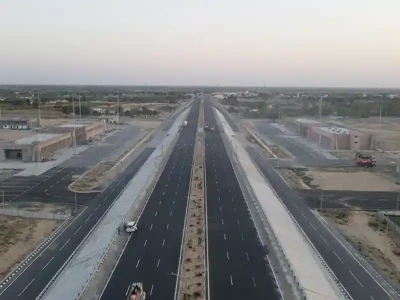
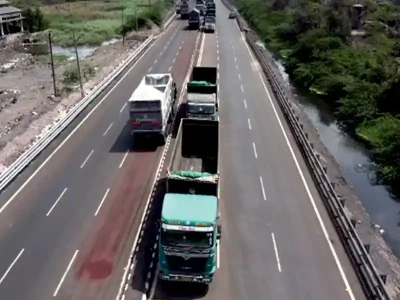
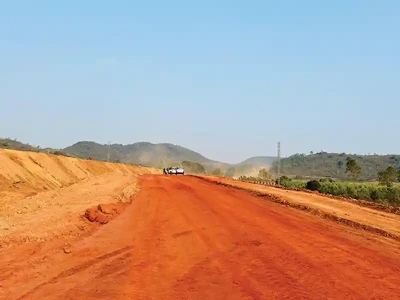
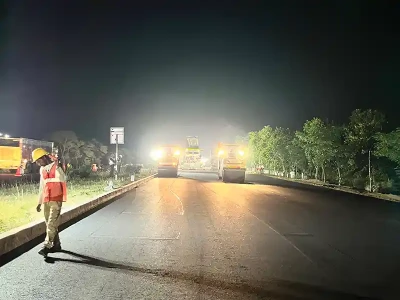
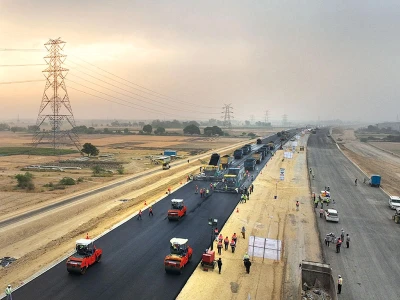
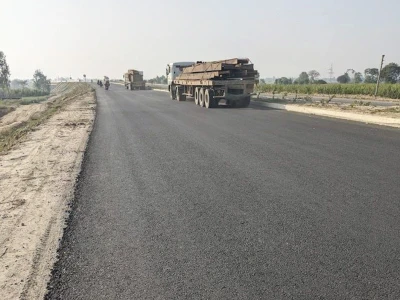
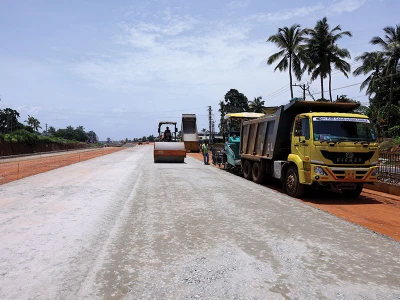
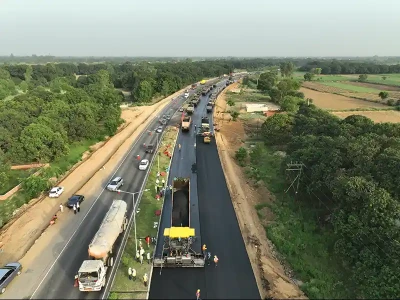
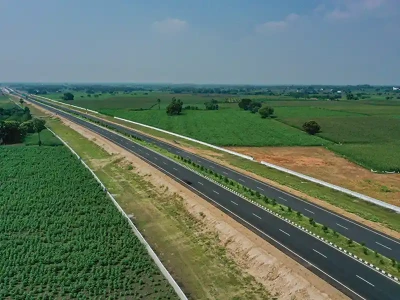
Notable among these initiatives is the steel slag road technology developed and validated by CRRI’s Flexible Pavement Division. Demonstration stretches at Hazira (Gujarat), NH-66 (Mumbai–Goa Highway), Ziro Valley (Arunachal Pradesh), and NH-33 (Jharkhand) have shown that steel slag roads can perform exceptionally well under high traffic and extreme weather conditions. These roads are 30–40% thinner and more economical than conventional ones, while offering higher strength, stiffness, and service life.
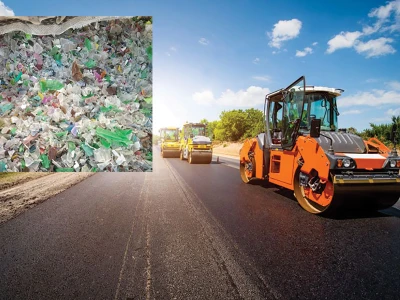
Equally remarkable are CRRI’s pioneering projects on plastic waste utilization. The Institute recently supported India’s first road trial using technical textiles made from end-of-life plastics, integrating geosynthetics into flexible pavement design. This innovation improves drainage, extends pavement life, and gives new purpose to discarded plastic materials, addressing both road durability and environmental management.
As of July 2025, over 56,875 km of rural roads have been sanctioned for construction using waste plastic under various interventions of the Pradhan Mantri Gram Sadak Yojana (PMGSY), out of which more than 43,700 km have already been completed. These large-scale applications reflect how CRRI’s research and technical guidance are translating into tangible outcomes, helping mainstream sustainable materials in India’s rural and national road network.
Similarly, CRRI’s work with red mud and fly ash has paved the way for new applications in bituminous mixes, sub-bases, and embankments. The Institute’s testing and processing protocols ensure that all waste-derived materials meet performance, strength, and environmental safety standards before field deployment.
Science to Standards: From Lab to National Practice
CSIR–CRRI’s approach goes beyond experimentation, it builds a scientific foundation for policy, practice, and performance. Every new material undergoes rigorous evaluation through physio-chemical analysis, laboratory simulations, pilot stretches, and long-term field monitoring.One of CRRI’s defining contributions lies in ensuring that waste-based materials are environmentally safe. The Institute applies advanced testing methods, including TCLP (Toxicity Characteristic Leaching Procedure), to evaluate the leaching potential of heavy metals and other contaminants. Long-term performance monitoring of experimental road stretches has confirmed that processed industrial by-products, when treated through CRRI’s protocols, are non-hazardous and structurally stable.
The Institute’s continuous performance monitoring framework, covering rutting, roughness, skid resistance, and deflection, further validates the durability and safety of such roads under real-world conditions.
Its research has contributed directly to the creation of national standards and guidelines that enable large-scale adoption of waste-based materials in road projects. By providing empirical data and field validation, CRRI supports agencies like MoRTH, NHAI, IRC, and BIS in drafting specifications that formalize the use of alternative materials across India’s highways. This scientific rigor ensures that the utilization of waste materials is safe, sustainable, and scalable, aligning with India’s circular economy and carbon reduction commitments.
A Model of Collaboration and Capacity Building
True to its national mandate, CSIR–CRRI acts as a bridge between science, policy, and field practice. The Institute works closely with government ministries, state PWDs, and industry partners to facilitate pilot projects, training programs, and workshops on sustainable road technologies.Its collaborations under initiatives like Waste to Wealth and Swachh Bharat Mission are creating awareness and technical capacity across all levels of road construction, from policymakers to contractors. Through these partnerships, CRRI ensures that sustainability principles are translated into actionable field practices.
By focusing on skill development, knowledge dissemination, and on-ground technical support, CRRI is enabling India’s road sector to adopt green, cost-effective, and durable construction methods with confidence.
Why CSIR–CRRI Deserves the Spotlight
As India aims to build sustainable infrastructure for the future, CRRI’s pioneering research and field applications demonstrate how science can drive circularity and resilience in the road sector. Its technologies are helping conserve natural resources, reduce emissions, and make infrastructure development economically more viable and environmentally sound.The Institute’s leadership in valorizing waste materials is not just solving a disposal problem, it is setting a new paradigm for green engineering in the transport sector.
CSIR–CRRI continues to expand its research into next-generation solutions, including carbon-neutral pavements, recycled material optimization, and smart monitoring systems, to support India’s long-term goals for sustainable and climate-resilient mobility. Its work exemplifies the powerful role of scientific innovation in achieving the national vision of a low-carbon, resource-efficient, and circular economy.
As India scales up its infrastructure ambitions, CSIR–CRRI’s scientific leadership demonstrates that sustainability is not only an environmental imperative but also an economically intelligent approach. The Institute continues to drive innovation, set standards, and empower stakeholders to build roads that are greener, stronger, and smarter, defining the sustainable future of India’s transport infrastructure.
This special feature gives insights by Dr. Manoranjan Parida, Director, CSIR–CRRI, into the Institute’s strategies, achievements, and roadmap for mainstreaming waste utilization and building greener, more resilient roads across the country.
Subsequent interactions with Dr. Satish Pandey, Dr. A.K. Sinha, and Dr. Ambika Behl highlight CRRI’s pioneering research on the use of steel slag, C&D waste, red mud, geosynthetics, polymer-modified materials, waste plastics etc in road construction. Complementing these discussions are case studies and technical articles that demonstrate how CRRI’s innovations are being translated into practical, field-ready solutions for sustainable and circular road infrastructure.
Exclusive Interviews


Published on:
13 November 2025
Published in: NBM&CW NOVEMBER 2025
Share:
We Value Your Comment