Crushing & Screening Industry Performance Over Cost

India’s crushing and screening industry is witnessing sustained growth, driven by rising aggregate demand and rapid technology adoption. According to IMARC Group, the market, valued at around USD 532 million in 2025, is projected to reach USD 1,556 million by 2034, growing at a CAGR of 11.5%. Crushing and screening equipment manufacturers are also expecting nearly 15% year-on-year growth in equipment demand, reflecting strong activity in quarrying, mining, and recycling applications.
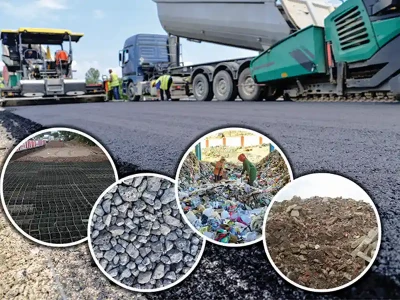
The growth outlook is underpinned by India’s position in the global aggregates landscape. According to Persistence Market Research, India has emerged as the second-largest aggregate consumer globally, with approximately 7.8 billion metric tonnes consumed in 2025. Multi-year development programmes such as Pradhan Mantri Awas Yojana (PMAY) targeting 30 million affordable housing units, Bharatmala Pariyojana, and the Smart Cities Mission are generating sustained demand across residential, commercial, and infrastructure segments, directly influencing aggregate production requirements. IMARC also estimates that India produces nearly 150 million tonnes of C&D waste annually, increasing the need for advanced crushing systems capable of efficient recycling.
Amid this expanding market, buying behaviour across quarries and contracting firms is clearly shifting. Equipment selection is no longer centred on the lowest initial acquisition cost. Instead, quarry owners and contractors are prioritising machine uptime, ease of maintenance, total cost of ownership, availability of spares, and strong OEM service support. As projects accelerate and margins tighten, unplanned downtime has become far more expensive than capital investment.
At the same time, investment strategies are also changing. While capacity expansion remains important in high-demand regions, many operators are focusing on fleet modernization, replacing ageing plants with more energy-efficient, automated, and compliant machines that offer higher reliability and lower operating costs.
Mechanical innovation is playing a central role in this transformation. Improvements in crusher chamber design, internal geometry, and material flow engineering are reducing blockages, uneven wear, and stress concentration. Enhanced wear-resistant materials, modular components, and quick-change service systems are extending component life while improving operator safety and reducing maintenance downtime.
Beyond hardware, digitalisation and automation are becoming key differentiators. Intelligent control systems, AI-driven process optimisation, remote monitoring, telemetry, and predictive maintenance tools are enabling operators to move from reactive to planned maintenance strategies.
This story brings together insights from both equipment manufacturers and plant buyers to understand how innovation is reshaping the crushing and screening landscape. It explores the technological, mechanical, and digital advancements being made for enhancing operational performance, and why these developments matter to quarry owners seeking higher uptime, lower costs, and future-ready aggregate processing solutions.
Terex India
With real-time monitoring, AI-enabled diagnostics and remote visibility through Connec-T, our machines identify issues early and maintain performance with consistent output quality.
Jaideep Shekhar, Managing Director

How are customers’ evaluating the Total Cost of Ownership before making a buying decision?
In recent years, quarry owners and contractors have changed the way they evaluate equipment. Price is no longer the deciding factor. Crushing and screening plants are now viewed as long-term productivity assets, where uptime, reliability, and total cost of ownership matter more than the initial purchase value.At Terex India, our discussions with customers increasingly revolve around lifecycle performance. Quarry owners and contractors carefully assess fuel efficiency, wear life, service intervals, digital visibility, and even resale value before making an investment. The focus has shifted to cost per tonne over the full operating life of the plant, reflecting a more mature and data-driven market. In practical terms, this means customers are prioritising equipment that delivers sustained uptime, predictable operating costs, and confidence in long-term returns rather than short-term savings.
Since infrastructure growth continues to require higher output, fleet modernisation is emerging as a stronger investment trend. Many operators are replacing older machines as part of expansion plans instead of simply adding more units. Higher fuel costs, stricter environmental and safety norms, labour shortage, and the need for consistent product quality are key reasons behind this shift.

Older equipment struggles to meet these expectations and often leads to higher downtime and operating costs. As a result, customers are investing in larger, fuel-efficient plants that consolidate production and simplify maintenance. The focus is now on smarter capacity and better efficiency rather than just increasing the number of machines.
What design and engineering improvements has Terex introduced in its plants to enhance uptime, durability, and crushing efficiency?
At Terex, uptime is engineered into the machine from the start. Our latest crushing plants use heavy-duty fabricated structures built for continuous operation in harsh quarry environments. Optimised load paths reduce stress across the frame, improving long-term durability. These refinements come from ongoing feedback from Terex India’s installed base and application engineering teams working with quarry operators across varied conditions.Critical components are protected through advanced sealing systems that prevent dust ingress, a common challenge in Indian applications. Maintenance accessibility has also been improved with purpose-designed service platforms, simplified layouts, and faster access to routine service points, reducing service time and unplanned stoppages. Together, these features maintain high availability even in round-the-clock operations.
A key efficiency improvement is the integration of anti-spin technology in the Terex MPS Cedarapids MVPX Series cone crushers. This prevents head spin during low- or no-load conditions, protecting liners and internal parts from premature wear, and reducing the risk of mechanical damage. Chamber geometries have also been refined to improve reduction efficiency and maintain consistent gradation. Updated feed opening profiles minimise bridging, while engineered internal flow distributes forces evenly, reducing recirculation and internal stress. The result is stable power draw, uniform wear, higher throughput, and lower wear cost per ton.
How is automation in Terex plants reducing maintenance downtime and improving safety?
Reducing maintenance downtime requires more than stronger components, it requires smarter systems. At Terex India, we have focused on mechanical simplification combined with intelligent automation. PLC-based automation and CANbus architecture provide real-time visibility into machine functions, enabling faster fault identification and simpler troubleshooting.A key shift has been toward direct drive systems, which can be significantly more fuel-efficient than conventional hydraulic systems, while also reducing system complexity. Direct drives reduce system complexity, eliminate multiple hydraulic components, and lower maintenance requirements, while also improving safety during servicing.
We were amongst the first to introduce telematics on track-mounted machines in India, giving customers real-time insights into machine performance and vital operating parameters. Alongside this, electric and hybrid solutions use advanced controls to reduce operating costs and carbon footprint, while offering a cleaner and safer maintenance environment.
What automation and AI tools is Terex using in its plants to improve operational efficiency and maintenance planning?
Automation is central to the design of modern Terex plants. Intelligent control systems continuously monitor crusher load, feed rate, power consumption, and machine settings, automatically adjusting operations to maintain consistent output while protecting the equipment from overload and unnecessary stress.Terex also applies AI through digital support tools that improve access to information and diagnostics. One example is Ask Terex, an intelligent assistant trained in technical documentation and operational data. It provides quick, contextual answers to operator and service queries, enabling faster troubleshooting and more informed decisions at the jobsite. This helps reduce downtime and support safer operation.
For lifecycle management, Terex offers remote monitoring through its Connec-T app, which gives real-time visibility into machine health, utilisation, and operating parameters. Currently available on hybrid machines and Franna cranes, it will expand to additional product lines. Early identification of potential issues allows maintenance teams to plan interventions instead of reacting to failures, improving availability, extending component life, and enhancing overall efficiency.
Looking ahead, what innovations will define the next generation of crushing and screening plants?
The next generation of crushing and screening plants will be shaped by intelligent automation, energy efficiency, modular design, and sustainability-driven engineering. The recent Union Budget reiterated a long-term push on manufacturing and infrastructure, including new schemes to strengthen domestic capital goods and construction equipment manufacturing, which will support demand for higher-spec, technology-enabled machines.Mechanical innovations such as enhanced chamber dynamics, hybrid and direct power solutions, and simplified service architectures will continue to evolve alongside digital intelligence. AI-driven optimisation, advanced analytics, and connected ecosystems will enable plants to self-adjust for maximum efficiency while minimising wear and unplanned downtime. Design philosophies will increasingly focus on reducing lifecycle costs, improving environmental performance, and enhancing safety.
By combining robust mechanical engineering with digital innovation and market-specific design, Terex India is well positioned to support infrastructure- and manufacturing-led growth with solutions that deliver productivity, sustainability, and long-term operational confidence. Our focus is to help customers lower lifecycle costs while delivering consistent performance across the full operating life of the plant.
Sandvik Rock Processing Solutions (India & Pacific Regions)
Our latest crushing plants combine optimised load-path engineering, constant liner performance and integrated automation platforms to deliver stable operation, consistent product quality, and lower lifecycle cost.
Asoktaru Chattopadhyay
President

What factors are driving the equipment buying behaviour of customers?
In the crushing and screening industry, buying decisions have moved from the lowest upfront price to the lowest total cost of ownership. Quarry owners and contractors now give greater importance to uptime, reliability, consistent performance, and ease of maintenance, since unplanned downtime directly affects production commitments and margins. The purchase price still matters, but it is evaluated alongside lifecycle cost, service support, parts availability, and energy efficiency.With aggregate demand rising across regions, customers are expanding plants with higher-capacity fixed or modular setups. At the same time, they are investing in modern, efficient, and compliant equipment to reduce operating costs, improve reliability, and meet stricter safety and emission norms. This trend is expected to drive strong demand for larger equipment in the market.
What recent design and maintenance improvements have been introduced in Sandvik crushing and screening plants to enhance uptime, operational stability, and ease of service?
Our latest crushing plants include several upgrades aimed at maintaining uptime in continuous, demanding operations. Heavier-duty frames, optimised load paths, hydraulic CSS arrangements, and rubber screening media improve durability, consistency, and serviceability.
Significant progress has also been made in crusher chamber design. A digital plant design tool helps select the most suitable chamber and mantle based on feed characteristics. We follow a constant liner performance philosophy to maintain uniform wear patterns. These changes deliver more stable operation, lower power peaks, and consistent end-product quality.To reduce downtime, we offer float assemblies that help improve plant performance and production continuity during maintenance activities.
What automation solutions are optimizing production and reducing operating costs of Sandvik plants?
We offer several automation solutions, including ACS and ASRi, which help improve plant uptime, optimise production, and reduce operating costs. Recently, we introduced SAM, a platform that connects the entire fleet to a single portal, allowing both site and office teams to access performance data, parts requirements and availability, and also support timely preventive maintenance instead of reactive repairs. PLC systems and level sensors are also provided for smoother plant operation.What features will define the next generation of crushing and screening plants?
The next generation of crushing and screening plants will be characterised by modular layouts, higher levels of automation, smarter mechanical systems, and sustainability-focused engineering. Future innovations will prioritise energy efficiency, lower emissions, longer wear life, and easier maintenance. Greater automation will help reduce operating costs while improving profitability by delivering accurate and consistent product output.“For us, crushing and screening is not just about production; it is about delivering reliable, repeatable aggregate quality every single day. Because if the aggregates fail, the highway fails.”
Kamlesh Gupta, Assistant Vice President Cube Highways

Aggregates must meet MoRTH and IRC specifications else it could lead to rejection of materials, extra repair work, delays, and damage to the organisation’s reputation.
For large highway and infrastructure projects, the quality of aggregates cannot be compromised because it directly affects how long the road lasts and how well it performs. From a management point of view, the key things we look for are uniform size distribution of aggregates and proper particle shape (not too flaky or elongated).It is also very important that the aggregates meet all MoRTH and IRC requirements, such as strength, durability, swelling properties, water absorption, and density. If these standards are not met, it can lead to rejection of materials, extra repair work, delays, and damage to the organisation’s reputation.
The crushing and screening plant should consistently produce properly graded aggregates suitable for bituminous layers as well as sub-base and base layers, without needing frequent manual corrections. Efficient screening, correct machine settings, and good process control are essential.
Equipment reliability and OEM support directly protect project costs and profitability.
In fast-paced projects where timelines and output are critical, machine breakdowns are not just technical problems, they directly impact project costs and profits. That is why equipment strength, life of wear parts, availability of local spare parts, and quick service support from the manufacturer are very important when we make investment decisions.A reliable equipment manufacturer stands out by providing proactive service, keeping spare parts available nearby, responding quickly to technical issues, and offering practical solutions at site. The OEM should not only sell machines but also understand project pressures and support the contractor like a technical partner. When maintenance schedules are predictable and communication is clear, it helps reduce uncertainties in operations and protects the project’s financial performance.
Buying decisions are being driven by the machine’s lifecycle value and not just the initial purchase cost.
Today, equipment buying decisions are no longer based only on the initial purchase cost. Instead, we focus on how much value the machine gives over its full working life. Factors like fuel consumption, maintenance frequency, level of automation, and the cost of producing each ton of material are very important for long-term profitability. A plant that uses less fuel, has longer-lasting wear parts, and faces fewer unexpected breakdowns can greatly reduce operating costs over the duration of the project.We see forward-looking OEMs as long-term partners who help us improve quality, efficiency, and environmental performance.
Automation and digital tools help keep production stable, reduce human errors, and improve both quality and consistency of output. Features like remote diagnostics, real-time monitoring, and predictive maintenance provide useful data to optimize plant performance and avoid sudden breakdowns. This improves equipment utilization, productivity, and transparency in operations. Such capabilities strongly influence our procurement decisions.With stricter environmental rules and faster project timelines, our expectations from equipment manufacturers have increased. We now look for plants with effective dust control, energy-efficient operation, and the flexibility to expand capacity when needed. Sustainability and compliance are no longer optional; they are essential for staying competitive. We therefore see forward-looking OEMs not just as machine suppliers but as long-term partners who help us improve quality, efficiency, environmental performance, and adaptability throughout the project lifecycle.
Puzzolana
Our automation-driven plants are designed to improve operational efficiency while strengthening our competitiveness in global markets.
Abhijeet Pai
President

What factors are driving the investment decisions of buyers of crushing and screening plants in India?
India’s crushing and screening sector is moving toward mobile and modular solutions equipped with IoT and automation to support rapid infrastructure growth. Buyers now evaluate equipment based on uptime and total cost of ownership rather than upfront price, leading to greater interest in energy-efficient electric or hybrid machines with predictive maintenance and easy servicing.In this environment, customers are focusing more on capacity expansion than simple replacement. Contractors and quarry operators are investing in larger, high-productivity fleets to meet the growing infrastructure and mining pipeline, including the government’s highway expansion programme.
At the same time, regulatory requirements such as CEV Stage V emission norms are accelerating adoption of cleaner technologies. The combination of higher throughput targets, cost-per-ton optimization, and compliance obligations is shaping current investment behaviour.
In what ways has Puzzolana upgraded its plants to improve their capacity, performance, safety, and lifespan?
To meet rising demand for more efficient plants, Puzzolana has developed higher-capacity machines equipped with automation features such as PLCs, HMI interfaces, and cavity sensors that regulate feed. This improves uptime and supports continuous, stable operation.
To target advanced application coverage, Puzzolana Fixed Shaft Cone Crushers are engineered with larger strokes (head motion), enabling higher crushing forces and increased throughput. This results in the production of superior-quality aggregates with improved shape and gradation, suitable for demanding infrastructure and mining applications.
Puzzolana has upgraded to advanced tungsten carbide overlays that offer superior abrasion resistance, significantly extending the operational life of critical components. Our re-engineered wear part designs now feature reinforced stress zones and optimized geometries to distribute impact loads more evenly, preventing premature failure.
We have also introduced modular, tool-less quick-change systems that allow for rapid component replacement, drastically reducing maintenance downtime while minimizing operator exposure to safety hazards.
What are the challenges in the market for crushing plants and how is Puzzolana dealing with them?
The market is moving toward larger-capacity plants that operate at lower cost per ton. Labour availability remains a major constraint, as crushing operations traditionally depend heavily on manual intervention. To address this, Puzzolana is focusing on automation-driven plants with real-time data monitoring and higher uptime. These developments improve operational efficiency while strengthening the company’s competitiveness in global markets.“Production capacity, material type, and total cost of ownership, along with reliable service support, are what truly drive our investment decisions.”
Hashim, Partner
Dcoasta Crushers

Long-term service and reliable support are extremely important when selecting a plant.
Based on our experience, while selecting a plant we first look at production capacity, the type of material to be processed, and the required final product size. Along with this, power requirement, power efficiency, and ease of maintenance are also very important factors that influence the decision.We do not look only at the price of the machine; we consider the total cost of ownership. This includes fuel consumption, spare parts cost, maintenance expenses, and overall operating efficiency. For us, simply buying a machine is not enough. What matters more is the long-term service ecosystem and reliable support, which is extremely important in our decision-making.
The biggest challenge we face is the delay in spare parts and slow service response time.
Critical components like the hydraulic system, gearbox, control panel, and power supply issues create major problems. If essential items such as jaw plates, bearings, or other wear parts are not available on time, the entire plant can shut down.In high-capacity plants, even a single day of shutdown leads to heavy financial losses and can also cause project delays. If one key component fails, the whole plant comes to a standstill.
That is why we are now focusing strongly on preventive maintenance, proper sourcing, and inventory planning. We are also reviewing how to better structure and manage this system at our Mangalore facility to ensure that the service network is strong and downtime remains minimal. The current plan does not fully address this.
Future investments will depend on market demand, capacity expansion, automation, and sustainability compliance.
Future investments will depend on how market factors shape up. If demand increases, we will need to go for capacity expansion and plan for higher production. That will require faster project execution, along with greater use of automation and digital monitoring.We will also have to focus on sustainability compliance, especially dust control and energy efficiency. Operations and maintenance will be equally important. Till now, we have not fully operated under a pure OEM model, where the manufacturer provides end-to-end support including genuine spares, service, and technical assistance. But we are planning to transition to a completely OEM-supported model in the future. We will need to evaluate both models, working in strategic partnership with an OEM as well as the traditional ownership model, and compare them before deciding what suits us better.
Propel Industries
Our automated crushing & screening plants with self-regulating controls and simplified mechanical layouts reduce manual intervention while sustaining continuous output.
V. Senthil Kumar
Managing Director

What shift have you observed in customers’ buying behaviour and how is Propel meeting their expectations?
We are seeing a clear shift in how customers are making buying decisions: the focus is no longer just on initial acquisition costs. Quarry owners and contractors now prioritise uptime, reliability, lifecycle economics, and operational certainty. Equipment is evaluated on long-term performance rather than only technical specifications or price. The market has matured, with customers choosing measurable performance outcomes over short-term savings.We believe the future belongs to OEMs that deliver defined outcomes like assured uptime, stable operating expenses, and long-term asset performance. This is not a temporary shift but a structural change in a market where reliability, intelligence, mobility, and sustainability now guide purchasing decisions.
How does the company ensure assured uptime, stable operating, and long-term asset performance of its plants?
Operators today work under intense pressure, tight project timelines with penalty clauses, rising energy and operating costs, stricter compliance requirements, and limited skilled manpower. In such conditions, even a single day of unplanned downtime can affect margins and project credibility.Propel’s crushing and screening systems are designed for continuous operation, supported by mobile and semi-mobile solutions that enable faster deployment and flexibility. Integrated monitoring systems provide early insights into machine health, while a strong nationwide service and spares network ensures quick response. Engineering is focused on durability and simplified maintenance to reduce operational risk.
As a result, customers benefit from higher uptime, lower cost per ton, fewer unexpected stoppages, and smoother project execution. They gain confidence in meeting delivery timelines with predictable operating costs over the equipment’s life.
The market is being driven both by capacity expansion and fleet modernization, and how is Propel supporting customers in this?
The market is clearly moving toward simultaneous expansion and modernisation, driven by economics, regulation, and the need for higher productivity. Both capacity expansion and fleet modernisation are a structural shift in how quarry owners and contractors plan production, manage costs, and meet tightening regulations.
Customers are facing multiple pressures like rising aggregate demand, higher energy and operating costs, ageing plants with frequent downtime, margin constraints, stricter compliance norms, and the need to operate with leaner manpower. In this environment, older plants are not just inefficient; they are becoming economically unsustainable.
At Propel, we see this as a sign of a mature industry transition, where customers invest to grow, optimise costs, strengthen reliability, and remain competitive in a demanding environment.
Propel supports this with scalable crushing and screening solutions that allow faster capacity addition while improving efficiency. Our energy-efficient systems reduce cost per ton, and our reliable plant designs ensure consistent output with minimal downtime. Digitally enabled features enhance operational visibility and control, while flexible configurations cater to both fixed and mobile applications. This enables customers to expand production without increasing operational risk.
This trend is reflected in Propel’s own performance, with 45% growth last year and a 35% CAGR over the past decade, establishing the company as a market leader in India’s crushing and screening segment.
How does Propel’s chamber design enhance uptime, efficiency, and reliability in real-world quarry operations?
Efficiency improvements begin at the crushing chamber, which directly influences productivity, wear life, energy use, and product quality. Feed variation, material abrasiveness, and continuous duty cycles often lead to blockages, uneven wear, internal stress, and fluctuating output. We address these challenges through refined chamber geometry and intelligent material flow engineering.Our designs promote smooth material movement, balanced internal loading, uniform wear patterns, and stable crushing conditions. As a result, customers benefit from higher and more stable throughput, fewer blockages, extended liner life, lower energy consumption per ton, and consistent product quality across shifts. This integrated engineering approach reflects our belief that performance must be built into every stage of design.
How do Propel’s crushing plants enable safer operations, faster servicing, easier maintenance, and improved TCO across the plant’s lifecycle?
Operators often deal with rapid wear in abrasive conditions, frequent liner replacements, safety risks during manual servicing, high mean time to repair (MTTR), and rising costs from extended shutdowns. These challenges can quickly erode margins if not addressed systematically.Our plants are designed for sustained loads, with simplified mechanical layouts, fewer routine service points, and systems engineered for long operating cycles. We use wear-resistant materials engineered for longer life and optimise wear part geometry to ensure uniform wear and predictable replacement cycles. Service areas are designed for easier access, while integrated safety systems protect operators during maintenance. A dedicated preventive maintenance team works at customer sites to analyse material characteristics and liner wear patterns, helping optimise performance.
How does Propel’s digital monitoring and predictive tools help its customers?
Propel integrates IoT-enabled remote monitoring and predictive tools that convert machine data into actionable insights. Through ProConnect and ProLive (Digital Connect App), customers gain cloud-based visibility into plant performance. The system tracks key parameters such as load, power consumption, runtime, and utilisation, while generating early alerts for abnormal patterns. Plant-wide automation combines monitoring, control, and safety logic, supported by centralised dashboards for informed decision-making.Customers benefit from fewer emergency stoppages, improved equipment availability, better spare-parts planning, longer component life, and lower lifecycle cost per ton. Real-time visibility across locations further strengthens operational control.
What will drive competitiveness in the crushing and screening segment?
At Propel, we believe the future of crushing and screening lies in intelligent, low-intervention production systems that deliver predictable results with minimal human dependency. As markets mature, competitiveness will depend less on machine size or TPH capacity and more on reliability, efficiency, and sustainable lifecycle performance.The coming decade will therefore be shaped by autonomy, data-driven intelligence, and sustainable engineering, where machines adapt to site conditions and protect uptime by design.
What are the challenges faced by the industry and how is Propel addressing them?
The industry is facing mounting challenges like shortages of skilled manpower, rising expectations for uptime and safety, pressure to cut energy use and emissions, and the need to manage multiple plants with limited supervision. Customers also demand predictable operating costs across varied applications.In response, we are developing plants with self-regulating control systems, simplified mechanical layouts that reduce manual adjustments, and modular concepts adaptable to different operating conditions. Integrated digital connectivity enables remote monitoring, ensuring consistent operation with minimal on-site intervention.
“Capital cost is only 20–25% of lifecycle expenditure. Our procurement decisions are driven by cost per ton, energy efficiency, timely maintenance, and long-term production stability.”
Rohit Singla, Director
SPS Construction India

Our plant selection is based on its aggregate quality, gradation precision, and ±5% throughput stability.
For large highway and infrastructure projects, aggregate quality is non-negotiable. Our plant selection is based on its ability to consistently meet MoRTH Clause 500 and IRC specifications without repeated recalibration. Gradation control must be precise, with minimal deviation across sieve sizes, particularly in critical fractions influencing asphalt and concrete performance.We place strong emphasis on particle shape, targeting a flakiness and elongation index below 25% for PQC and bituminous layers to ensure better interlocking and pavement durability. Throughput stability is equally critical; modern plants must maintain production variation within ±5% despite variable feed conditions.
We evaluate crushing and screening systems not just on rated capacity, but on their ability to deliver specification-compliant, cubical aggregates at scale –– consistently and predictably.
Reliability is not just machine strength; it is the strength of the technical partnership with the OEM.
In high-volume, time-bound projects often exceeding 5–8 million tons annually, downtime directly affects paving schedules and financial margins. Durability is therefore central to our investment decisions. We look for heavy-duty structures engineered for Indian quarry conditions, long bearing life cycles exceeding 12,000 operating hours, and optimized crushing chambers that extend liner life by 20–30%.However, mechanical robustness alone is insufficient. Local spare availability within a 48-hour window and responsive OEM service support significantly reduce risk exposure. A dependable OEM differentiates itself through strong regional service networks, preventive maintenance audits, performance optimization support, and engineering consultation during plant layout and commissioning.
Cost per ton, not capital cost, drives our long-term procurement strategy.
Capital expenditure represents only 20–25% of the plant’s lifecycle cost over a decade of operation. Our procurement strategy is driven by cost per ton rather than acquisition price. Fuel efficiency, optimized hydraulic systems, and advanced drive technologies that reduce consumption by 10–18% have a measurable impact on operating economics.Extended maintenance intervals and automation-assisted load control reduce manpower dependency and liner wear. In most quarry conditions, our cost benchmark ranges between ₹18–₹28 per ton, depending on geology and scale, and even an 8–12% operational saving over time significantly enhances margins.
The future lies in mechanical robustness combined with intelligent automation.
Digital technologies are redefining plant productivity and decision-making. Real-time production dashboards tracking throughput, power draw, and downtime enable data-driven operational control. Remote diagnostics shorten troubleshooting cycles by up to 40%, while sensor-based predictive maintenance helps prevent critical failures, particularly in bearings and rotating assemblies. Automated feed control and smart interlocking between crushing and screening stages ensure optimal load distribution and improved overall equipment effectiveness, often exceeding 85% in well-optimized plants. Automation today is integral to maintaining productivity, reducing human error, and achieving stable output.We view OEMs that undertake environmentally responsible manufacturing as our strategic partners and not just vendors.
With tightening environmental regulations and accelerated execution timelines, OEM expectations have evolved. Integrated dust suppression systems, enclosed conveyors, and compliance-ready pollution control solutions are baseline requirements. Energy-efficient motors and optimized chamber designs reduce power consumption and recirculation loads. Modular plant designs that allow scalable capacity upgrades from 200 TPH to 400+ TPH without complete redesign offer strategic flexibility.We increasingly view OEMs not as equipment vendors but as long-term production partners who align with our growth trajectory, technological roadmap, and sustainability commitments.
Hailstone
Our latest crushing plants combine heavy-duty construction, optimized chamber geometry and smart automation to deliver higher uptime, consistent output, and lower operating cost across demanding applications.
Sooraj Cherukat
Head – Sales and Business Development

What factors are influencing purchase decisions in the crushing and screening industry?
The crushing and screening industry is undergoing a clear shift in buying behavior, driven by changing project demands and rising operating costs. Quarry owners and contractors no longer evaluate equipment solely on initial acquisition price. Instead, decisions are increasingly based on long-term value factors such as uptime, reliability, ease of maintenance, and total cost of ownership (TCO).With large infrastructure projects running on tight schedules, uninterrupted production has become essential. Buyers therefore prioritize machines with robust design, high availability, and minimal downtime. Equipment equipped with intelligent monitoring, predictive maintenance, and quick serviceability is preferred because it directly improves productivity and profitability.
Energy efficiency has also become a major consideration. Rising fuel prices and sustainability expectations are encouraging customers to choose solutions that reduce power consumption and maintenance expenses over the machine’s lifecycle. Availability of spare parts and strong after-sales support are now decisive selection factors.
Do you see ageing machines being phased out by quarry owners as projects are now more complex and time bound, requiring more efficient machines?
The investment behavior of quarry owners reflects a balance between capacity expansion and fleet modernization, with priorities varying by project and market segment. However, a clear trend is emerging toward replacing ageing equipment with more efficient and compliant machines.While infrastructure growth still drives capacity additions, many quarry owners and contractors recognize that simply increasing the number of machines is ineffective. Older fleets typically suffer from higher fuel consumption, frequent breakdowns, and inconsistent output. As a result, customers are replacing legacy equipment with advanced solutions that provide better uptime, lower operating costs, and improved environmental compliance.

This shift is driven by rising energy costs, stricter emission norms, and the need for predictable, high-quality production. Modern machines featuring automation, smart diagnostics, and energy-efficient designs offer significant productivity and lifecycle advantages while supporting sustainability goals and reduced carbon footprints.
What value engineering has Hailstone done in its crushing plants to enhance their crushing efficiency, ensure higher availability, lower maintenance frequency, and consistent output in round-the-clock operations?
Maximizing uptime in continuous, high-demand operations is a key focus of Hailstone’s latest crushing plant designs. The engineering approach emphasizes strong mechanical construction, simplified maintenance, and built-in protection systems to ensure reliable performance in quarry and mining conditions.The plants feature heavy-duty fabricated structures and reinforced frames that withstand high impact loads and vibration. Upgraded bearing arrangements, optimized shafts, and improved metallurgy in critical components increase durability and extend service life.
Maintenance has been simplified through quick-access features such as replaceable wear liners, modular assemblies, and better inspection points. These allow faster service and shorter maintenance stoppages. Hydraulic-assisted adjustments and automated setting controls also enable operators to fine-tune performance without prolonged shutdowns.
Reliability is further improved with advanced dust sealing, enhanced lubrication circuits, and temperature monitoring systems that protect components from premature wear. Optimized mechanical layouts ensure smooth material flow, reducing blockages and equipment stress. Together, these improvements provide higher availability, lower maintenance frequency, and consistent output in round-the-clock operations.
Please enumerate the efficiency gains following the improvements made in your crushing plants.
Efficiency gains are achieved through improved crusher chamber geometry, material flow management, and wear optimization. Refinement of nip angle, crushing stroke, and cavity profile improves compression and produces uniform reduction. This increases throughput while lowering power consumption and minimizing recirculation.In cone and jaw crushers, redesigned internal geometry and liner configurations ensure balanced material distribution. Improved feed openings and progressive crushing zones eliminate choke points, reduce internal stress, and promote even liner wear, extending component life.
Material flow has been further enhanced through better chute design, optimized transfer points, and smoother stage transitions, preventing hang-ups and segregation. Combined with improved dust sealing and vibration control, these features stabilize performance.
Durability is enhanced with usage of wear-resistant materials, optimized wear-part design, and service-friendly features. High-grade alloy steels extend the life of liners, blow bars, and impact plates, while improved geometries ensure even wear and prevent premature failures. Modular components allow selective replacement, reducing maintenance cost and time. Quick-change mechanisms, hydraulic adjustments, accessible inspection points, and standardized parts further simplify servicing, enabling faster turnaround and consistent plant productivity.
Using computational design tools supported by field feedback, Hailstone continues to refine plant layouts to deliver predictable wear patterns, reduced downtime, and higher productivity at lower operating cost.
What technologies are being used at Hailstone to improve plant performance, enable predictive maintenance, minimize unplanned stoppages, and extend component life?
Hailstone plants use PLC-based centralized control panels, real-time sensors, and IoT-enabled telematics to monitor parameters such as power consumption, feed rate, vibration, temperature, and throughput. The system automatically adjusts crusher settings, feeder speed, and screen performance to maintain optimal conditions without manual intervention.AI-driven analytics study operating trends and recommend adjustments to improve efficiency. Predictive maintenance algorithms identify early signs of wear or imbalance, enabling planned servicing instead of unexpected failures. This increases uptime and reduces maintenance costs.
Automation delivers measurable operational benefits. It maintains consistent product gradation, limits oversize generation, and stabilizes output quality, reducing the need for reprocessing. Automated load management can improve productivity by 10–15% in many applications, while optimized power usage lowers energy consumption. Operators also gain real-time visibility through remote dashboards and performance reports, enabling quicker troubleshooting and better planning.
We further support operations with remote monitoring, telemetry, and cloud-based maintenance solutions that shift maintenance from reactive to preventive. IoT sensors continuously transmit machine health and production data to a centralized dashboard accessible from any location. Advanced analytics generate alerts before failures occur, allowing maintenance to be scheduled during planned downtime.
These tools help optimize spare parts planning, minimize unplanned stoppages, and extend component life. Remote diagnostics allow Hailstone support teams to assist customers quickly, reducing site visits and troubleshooting time. Detailed performance reports enable better decisions on utilization, efficiency, and energy management.
What innovations in design and advanced features will Hailstone incorporate in its plants to deliver more efficient crushing and screening solutions?
Future crushing and screening plants will focus on simplicity, digital intelligence, sustainability, and lifecycle value. Hailstone is developing compact modular systems that allow quick installation, relocation, and capacity expansion while improving structural stability and reducing wear.Energy efficiency will improve through hybrid-electric drives, optimized chambers, and low-friction mechanisms that lower power use and emissions. Standardized quick-change components and advanced wear materials will further reduce maintenance and ownership costs.
Digital integration will include smart sensors, AI-based optimization, and autonomous controls to maintain consistent product quality with minimal intervention. Together, these advancements will deliver reliable, efficient, and environmentally responsible equipment suited for global performance and cost expectations.
McCloskey International
McCloskey continues to refine the mechanical design of its crushing plants to ensure longer operating hours in demanding, round-the clock applications.
Kush Pare
Sales Head – India & Asia

What trends are shaping demand for mobile crushing and screening plants in India and how is McCloskey meeting customer expectations?
India’s rapid infrastructure expansion across highways, railways, and airports is creating strong demand for aggregates, pushing buyers toward higher-capacity and more efficient equipment. Many customers now prefer flexible solutions, making tracked mobile units attractive compared to costly and complex fixed plant installations.McCloskey’s wide global portfolio of mobile crushing and screening equipment, including hybrid and electric variants, positions the company well for these evolving requirements. Technology also plays a major role, as customers increasingly depend on digital monitoring to prevent downtime. Built-in telematics in the machines simplifies fleet management and improves operational visibility.
Customer priorities vary by application. Quarry owners running long-term operations focus on uptime and total cost of ownership, while contractors working across multiple short-duration projects value mobility, easy operation, quick maintenance, and fuel efficiency.
The market is gradually shifting toward replacing older fleets with more reliable and compliant equipment, particularly among contractors operating under tight timelines. Growth is therefore driven less by the number of machines sold and more by the adoption of modern, productive equipment.
Investment decisions are influenced by environmental regulations, labour availability, financing and rental options, and increasing competition among manufacturers. As a global premium brand, McCloskey supports this transition through proven products and a continuously expanding distribution network across India.
What mechanical and design improvements has McCloskey made in its plants to improve efficiency, reduce maintenance intervals, and extend component life?
McCloskey continues to refine the mechanical design of its crushing plants to ensure longer operating hours in demanding, round-the-clock applications. The machines are built for productivity, reliability, and ease of operation and maintenance.Efficiency improvements begin with updated jaw crusher liner profiles that support application-specific configurations and reduce wear. Optimized liners help material exit the crushing chamber faster, improving throughput. Jaw deflector plates at the discharge protect the main conveyor while directing crushed material efficiently toward the next stage.

In cone crushers, the automation system monitors clamping pressure and cylinder holding forces. When tramp material or excessive fines cause pressure spikes, the system automatically opens slightly and then returns to the preset position once the material passes. This reduces stress on the main frame and improves equipment longevity.
Additional durability gains come from wear-optimized components, including 22% manganese liners for abrasive applications. Correct liner selection minimizes wear and maintains performance consistency, while improved material flow lowers internal stress and maintenance frequency. Together, these measures enhance operational stability, extend component life, and reduce downtime.
How do McCloskey’s automation and telematics capabilities improve machine performance, preventive maintenance, and operational reliability?
McCloskey machines operate through a central control system that provides early warnings based on predefined limits and operating parameters. These alerts help customers identify potential issues before they escalate. Optional telematics enables remote performance monitoring, allowing service specialists to plan maintenance in advance and minimize downtime and production loss.Cameras continuously monitor crusher chamber fill levels and automatically regulate the feed rate. Maintaining the optimum fill level prevents overloading and ensures consistent product quality and throughput.
These automation capabilities are supported by Tedd Engineering, a UK-based specialist that designs advanced automation, electrical, and control systems for mobile equipment in the crushing and screening sector. As part of the same group as McCloskey International, the company develops tailored technology specifically for McCloskey machines worldwide. Having this expertise in-house strengthens product reliability and provides better support for dealers and customers.
What are McCloskey’s future product development priorities to improve productivity and sustainability?
Our engineering and product development teams continuously study industry trends and develop new concepts and prototypes to meet changing customer requirements. Future developments will emphasize mechanical innovations that improve crushing efficiency, raise productivity, and reduce cost per ton. The company is also increasing its focus on sustainability by introducing a broader range of diesel-electric and fully electric drive systems.“Our four Guinness World Records underscored a fundamental truth: highways are only as reliable as the materials that form their core, and those materials are only as reliable as the systems that process them.”
R. S Boyal, General Manager - Plant & Machinery, Rajpath Infracon

Crushing and screening plants are the foundational force that determines quality, speed, and reliability in modern highway construction.
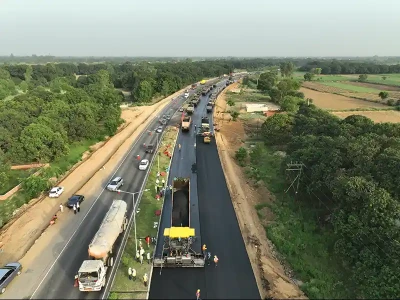
From the vantage point of achieving four Guinness World Records, accomplished by Rajpath Infracon in January 2026 on the 6-lane access-controlled greenfield NH 544G expressway in Andhra Pradesh, the role of crushing and screening plants emerges not as a peripheral function, but as a foundational force shaping the future of quality, speed, and reliability in highway and infrastructure development.These plants are the unseen engines that translate design intent into durable reality, governing gradation accuracy, material consistency, and uninterrupted supply that modern high-performance projects demand, especially where timelines are compressed. The ability to deliver uniform aggregates at scale, adapt swiftly to geological variability, and maintain zero-compromise quality under relentless pace distinguishes routine construction from benchmark-setting infrastructure.
In an era where infrastructure must be faster to build, longer to last, and resilient to escalating loads and climatic conditions, advanced crushing and screening plants stand at the intersection of engineering precision and execution excellence.
The future of highway construction lies in adopting stationary, mobile, semi- and fully automated, and sustainable technologies.
Aggregate production and precise sizing ensure strength, durability, and uniform load transfer in pavements, directly influencing compaction quality, structural performance, service life, and long-term reliability of highways and infrastructure assets.Using stationary and mobile crushers together further strengthens cost efficiency. Stationary plants deliver consistent high-volume output, while mobile crushers optimise on-site processing, reduce material haulage, lower fuel consumption and handling losses, accelerate schedules, and maximise overall project efficiency. This combination was used to optimise output during construction of our Guinness World Record road stretch.
Screening plants are essential facilities in highway construction and infrastructure projects, designed to separate materials by size and ensure high-quality outcomes for highway layers. By automating material sorting, advanced screening plants with adjustable screens deliver accurately graded, contamination-free aggregates that improve mix uniformity, compaction efficiency, and structural integrity. By eliminating oversized particles and excess fines, they help reduce pavement defects, enhance load-bearing performance, extend service life, and ensure the consistent quality required for building high-performance, durable roads, while also offering significant cost-saving benefits.
Strong OEM support ensures equipment uptime and execution certainty.
Support from Original Equipment Manufacturers (OEMs) of crushing and screening plants is critical in road construction, where project success depends on uptime, performance consistency, and rapid problem resolution. OEMs provide technology know-how, application-specific plant configuration, timely spares, and on-site technical support to ensure plants operate at peak efficiency under demanding schedules.During high-speed or record-setting projects, OEM-backed predictive maintenance, process optimisation, and quick troubleshooting reduce breakdown risks, quality deviations, and cost overruns. OEM after-sales support ensures plant uptime, consistent aggregate quality, faster issue resolution, skilled operation, and optimised performance through timely spares, technical expertise, maintenance programmes, and continuous process improvement. It was this seamless support that we engaged to deliver our targets when production schedules were finalised during the Guinness World Record attempt planning.
Pralcka
Modern crushing plants are no longer just about capacity; intelligent automation, optimized material flow design and predictive monitoring now work together to deliver higher uptime, better product quality and lower lifecycle cost.
Benny Paul
CEO

What factors are influencing equipment purchasing decisions and is the market driven more by capacity expansion or fleet replacement?
Equipment selection today is guided more by uptime, reliability, and total cost of ownership than by initial purchase price. Buyers assess lifecycle performance, including fuel consumption, wear part life, serviceability, and resale value. Ready availability of spares and dependable after-sales support are critical, as downtime directly affects profitability. Environmental and safety compliance requirements are also shaping decisions, particularly for organized quarry operators and large contractors.Investment trends show a stronger focus on replacing ageing fleets with efficient, automated, and compliant machines rather than expanding capacity. Rising fuel and operating costs, tighter regulations, labour shortages, and the need for higher hourly productivity are key drivers behind this shift. Modern plants deliver greater output at lower operating cost, making replacement a more practical long-term strategy.
What mechanical and design improvements have been introduced in your latest crushing plants to enhance uptime, material flow, and product quality?
Our latest crushing plants feature several mechanical enhancements aimed at improving reliability in continuous, high-load operations. Heavy-duty fabricated structures support demanding applications, while optimized bearing housings and shaft assemblies reduce vibration and fatigue. Modular assemblies enable quicker on-site servicing and faster component replacement. Improved sealing systems also limit dust ingress, helping prevent premature failures and maintain consistent performance in quarry conditions.
Efficiency has been further improved through refinements in crusher chamber and material flow design. Updated chamber geometry promotes uniform crushing and reduces stress concentration. Redesigned feed openings and discharge zones minimize blockages, and smoother internal flow paths ensure steady material movement and consistent gradation. Together, these changes lower wear rates, increase throughput, and improve final product quality.
What measures have been implemented to extend component life, improve maintenance safety, and reduce downtime in Pralcka products?
To extend component life and minimize maintenance interruptions, high-grade wear-resistant alloys and manganese steel combinations are used in critical areas. Wear parts have been redesigned to achieve uniform wear patterns and longer service intervals.Maintenance efficiency is improved through quick-change components and hydraulic-assisted servicing systems, enabling faster replacements. Improved access platforms and integrated safety interlocks also support safer maintenance procedures.
How do automation, remote monitoring, and predictive maintenance features improve plant performance and reliability?
Automation is integrated through PLC-based control systems with intelligent interlocking, load-based crusher regulation, and automated start–stop sequences. These functions optimize power use and reduce the chances of operator error. As a result, plants deliver consistent output, improved product gradation, and higher productivity while lowering energy consumption and dependence on manual intervention.Digital tools further support performance through remote monitoring, telemetry, and real-time alerts. Predictive maintenance indicators track machine health parameters, allowing operators to plan servicing in advance rather than reacting to failures. This approach improves uptime, reduces breakdowns, and extends overall equipment life.
What key trends do you think will shape the next generation of crushing and screening plants?
Future crushing and screening plants will feature modular and scalable layouts that allow faster installation and easier upgrades. Greater use of smart sensors and AI-based optimization will improve operational efficiency and decision-making.Energy-efficient drive systems and environmentally conscious design will reduce operating costs and environmental impact. The overall focus will remain on lowering lifecycle expenses while supporting sustainability goals. Together, these developments will enhance global competitiveness and meet customer expectations for productivity, efficiency, and long-term asset value.
“We prefer brands that have a strong presence in our zone because when several plants are operating nearby, spare parts and technical support are readily available, which reduces operational risk.”
Udit Yadav, Owner
Shree Balaji Stone Crusher

The first thing that we look for in an OEM is their after-sales service and spare parts availability.
When selecting a crushing and screening plant, the first thing we look at is after-sales service, especially the availability of spare parts and their cost. If parts are not available when required, the plant will remain shut. We also check the warranty and the level of technical support the company provides. Since I am operating plants of various OEMs, I have experienced different types of services –– sometimes the service team is strong; in some cases the spare parts are expensive (especially when sourced from abroad), leading to delays; sometimes the parts are available locally, but at times not all critical components are stocked and the service response is also slow. Many plants are sold, but later parts are not available. I have installed a highly automated and expensive plant with sensors and full support, and it is working well, but spare parts are not available easily. OEMs that are performing better in our area are those with a faster service response and easier availability of spare parts, which ultimately leads to better overall plant performance.A strong zone-wise presence ensures faster support and easier access to spare parts.
Before buying, we always check how many plants of that company are already running in our zone. If one company has 10 plants in a region, spare parts are easily available nearby, so the chances of choosing that brand increase. So, zone-wise presence matters a lot.Automation and sensor-based systems have significantly improved plant uptime and operator efficiency, but they are expensive.
From an operator’s perspective, companies now provide training, and many new plants have touch screens, automation, and sensors which send out signals if a motor is failing or if there is any technical issue. This helps the operator understand where the problem lies and even do some trouble shooting. So, modern machines with such technologies have really improved our operations at jobsites by increasing uptime and productivity. The only issue is that manufacturers sell automation at very high prices. I installed automation in an existing plant through a third party at a reasonable rate and it works very well.OEMs should suggest a plant based on an analysis of the region’s geology.
Another issue is that sales people sometimes recommend the wrong model just to offer a lower price. Ideally, the company should study the stone hardness and material size of that zone before suggesting a plant. Conditions vary from zone to zone. Some regions run 24x7, 365 days, while others shut down due to mining or government issues or during long rainy seasons. In active zones where production is continuous, customers need to be assured of timely availability of genuine spare parts by the OEMs. We usually take quotations from three to four companies and compare pricing. There are only a few major companies with some new Indian companies coming into the market, but reliability is an issue. Some customers bought cheaper machines and faced huge losses within a year.
Published on:
16 March 2026
Published in: NBM&CW MARCH 2026
Share:
We Value Your Comment