Gainwell Offering Customers Complete Lifecycle Solutions
Sunil Chaturvedi, CMD, Gainwell, discusses the company’s plans to become a complete end-to-end solution provider to both premium and mid-sized customers by introducing unique products, offering technology-led solutions, refurbishing used machines with tech-rich features, and exporting to countries worldwide.

What growth prospects do you see in India’s construction industry and Gainwell’s contribution towards infra development?
India today is a USD 4.19 trillion economy. According to government statistics, about 16–17% of this GDP comes from manufacturing, which translates to roughly USD 650 billion. The Government of India has made a bold commitment to increase manufacturing’s share of GDP to 20% by 2030.Now, let’s look at the numbers. India is projected to become a USD 7 trillion economy by 2030. If manufacturing contributes 20% of that, it would amount to approximately USD 1.4 trillion. This means scaling manufacturing output from about USD 650 billion today to USD 1.4 trillion within the next five years. It is an extremely ambitious growth target, and we can already see this intent reflected clearly in government policies.
The government is actively encouraging manufacturing across sectors, promoting the adoption of new technologies, and enabling domestic production based on these advanced technologies. There is a significant opportunity, and the government is ready to support it. The target of USD 1.4 trillion is ambitious. However, for manufacturing to reach this level, there must be corresponding demand and sufficient capital expenditure (capex).
At Gainwell Group, we see ourselves as a small but meaningful part of this larger national vision. We have always aspired to be a total solutions provider. We do not want to be a company that simply sells machines; we want to be a company that helps customers solve their toughest operational challenges. This is aligned with Caterpillar’s philosophy, and it is also core to Gainwell Group’s identity.
What is the extent of Gainwell’s services in terms of product supply, technology advancement, and customer engagement?
Our approach begins with understanding the customer’s project—what they are trying to achieve, the challenges they face, and the outcomes they expect from an engineering standpoint, based on which, we design and deliver a comprehensive solution. This could include machines, rental solutions, parts and maintenance contracts, integrating technology overlays, enabling access to machine and performance data, and offering rebuild options. Our machines are not single-life assets; they are multi-life machines. We rebuild and rehabilitate them every 5-6 years, extending their operational life by another 5-7 years without disruption.There is a growing demand for equipment, and, more importantly, for integrated solutions. Customers are looking for a single, reliable partner who can deliver everything from equipment to service and parts. At Gainwell, we offer all of this through our digital platforms (apps and websites). Customers can book services, order parts, and manage their requirements without even needing to call a service engineer. Services and parts are delivered to their doorstep within timelines that suit their operations. This digital integration has enabled a much closer engagement with customers and ensures that their expectations are met efficiently, and on time.
Which infra sectors and international markets is Gainwell catering to?
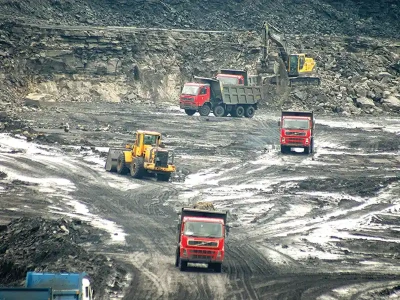
Most of our machines are operating in infrastructure and mining sectors. Demand from the core infrastructure sector is increasing for building roads, railways, airports, housing communities, new cities, metro systems…everything is unfolding in India. Irrigation is also a big component – all of which requires high-technology machines that can build within defined timeframes.Such machines are unlikely to come from the West anymore. The reason is simple: Western economies have become expensive. For the Gainwell Group too it would be prohibitively expensive and no longer sustainable if we were to manufacture the machines in Europe, the USA, or Australia, and supply them to India, Southeast Asia, or Africa.
So, what we are looking at is to make the machines in India to meet the country’s growing demand, but also to supply them to markets like Africa, Southeast Asia, and other regions of the world, and hopefully, someday, even to the Western markets such as the United States, North America, and South America. We are already exporting our mining machinery to Australia and the United States.

Now that our manufacturing in India has stabilized and the first generation of equipment is already operating in Indian mines for producing coal and other minerals, we have plans to scale up and start exporting the machines. We recently launched a Made in India surface miner based on room-and-pillar technology, which is used for underground mining. This machine is in strong demand in Australia, some African countries, China, and in Southeast Asia.
Is Gainwell planning to add a few more products for the mining segment to truly become a total solutions provider?
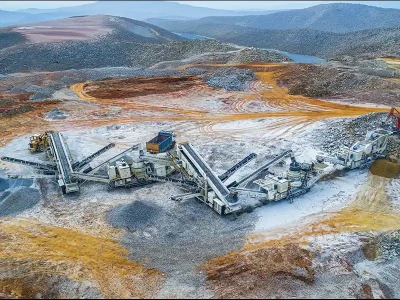
Mining requirements are broadly categorized into two segments: soft rock mining which includes coal and minerals such as potash, phosphate, clay, etc. For these, both surface and underground mining equipment are available with the Gainwell Group. In the underground soft rock segment, India was completely dependent on imports earlier. But after we acquired the technology from Caterpillar, we are now working to reduce India’s dependence and make the country completely self-sufficient.As the world moves towards renewable energy, hard rock mining becomes even more critical with copper, zinc, uranium, and several other minerals seeing growing demand. In this segment, Caterpillar continues to offer a wide range of equipment, which we are bringing to India. Our customers include Hindustan Copper, Hindustan Zinc, etc, to whom we are offering the equipment, along with their maintenance, and jobsite support. However, in underground hard rock mining, certain support equipment is currently being sourced from Germany and other countries.
We are in discussions with a few European underground equipment manufacturers to set up their manufacturing operations with us in India, and export the machines from here. This will significantly contribute to scaling India’s manufacturing capabilities. In surface mining also we plan to introduce a range of products over the next few years. We have already formed a partnership with Daimler for distribution of their mining tippers across almost 70% of the country. Our ultimate goal is to bring world-class products across mining, infrastructure, power and energy, and the transportation sector.

How is Gainwell looking at the emerging opportunity presented by the requirement for large tower cranes, and other products, now that the government is imposing anti-dumping regulations?
It is true that overseas players are dumping their products into India at prices lower than in their home markets. The Indian government has taken cognisance of this, and anti-dumping duties will be levied to protect the domestic industry. It would be ironic if India were to depend on dumped imports rather than support its own manufacturing ecosystem.It is also true that over the last two months—and continuing—more than 600 cranes have already been imported or are scheduled to arrive in India. This represents nearly one to one-and-a-half years of inventory already held by players such as XCMG, Zoomlion, and SANY.
TIL has been a star manufacturer of cranes and material-handling systems since the 1950s or early 1960s. Unfortunately, TIL was going through a very difficult phase when India’s material-handling requirements were growing rapidly, which opened the market for many new competitors to enter. But we are back now!
TIL made a strong comeback in January 2024. Both its manufacturing facilities have been revamped. And as we speak, we are raising another ₹150 crore to invest in TIL. A new Gainwell facility is coming up on a 30-acre plot in Greater Noida, and we will soon be setting up a facility in Udaipur.
Please elaborate on the features of Gainwell’s newly introduced Carry King 515 Pick-and-Carry Crane, 85-ton truck crane, and the empty container handler.
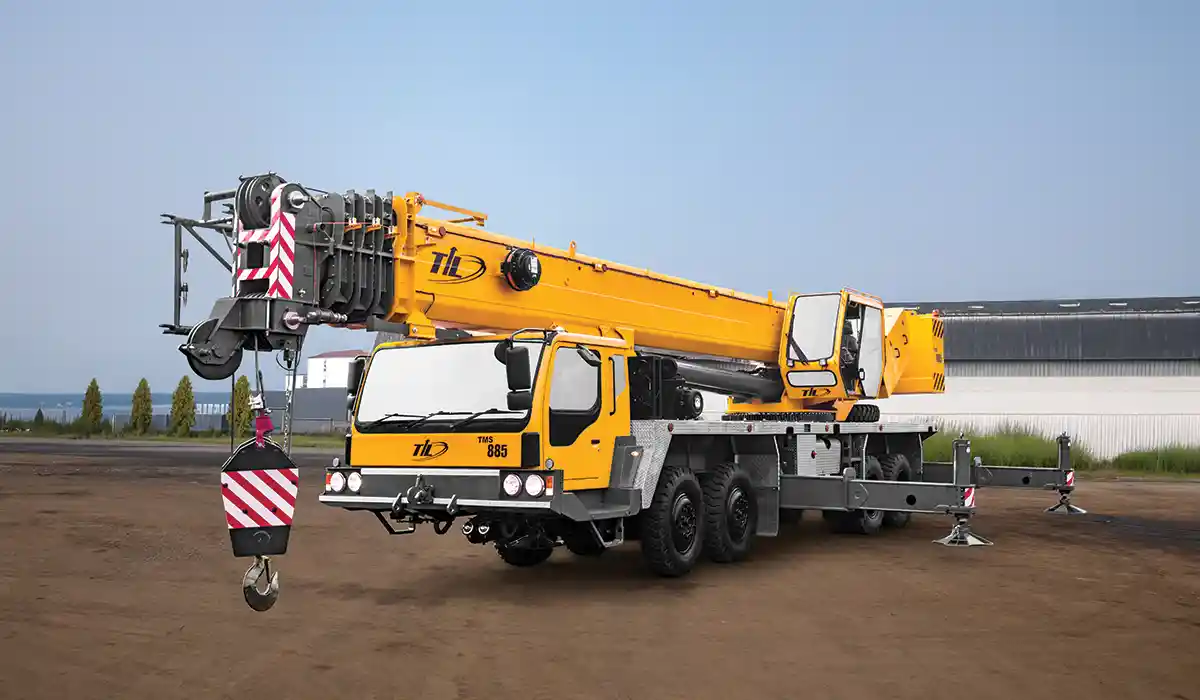
Gainwell’s new Carry King 515 is a unique pick-and-carry crane that can do the work of three machines: it can load material onto a truck, transport it, and offload it at the destination. All these three functions are integrated. As one of our most versatile machines, it is creating a lot of customer interest for use in ports, cement plants, and for concrete operations. We believe this segment alone represents an addressable market of around 5,000 units. We are confident that it will establish its own category and gain a 10% market share over the next 3-5 years. To make the product’s manufacturing cost-effective, we will develop the components in-house while other parts will be sourced.We are also moving into the heavy-duty and rough terrain segment and with the launch of our 85-ton truck crane (in which TIL had held almost 95% market share), we have filled a gap in this segment. Going forward, we plan to scale it up to 250 – 300 tons since there is a requirement for larger-capacity truck cranes. This is an opportunity which we intend to tap and regain market leadership.
The empty container handler is another unique solution. While reach stackers have been available for loaded containers, and can stack up to five levels high, there has been no dedicated solution for handling empty containers. Using a reach stacker for empty containers is highly inefficient and expensive. As a result, customers often rely on forklifts or improvised side-grab solutions, which are unsafe as they can topple over, putting lives at risk.
Moreover, container yards and dry ports in India often have uneven, poorly paved surfaces. This has created a clear need for a rough-terrain empty container handler that can safely operate in such conditions. The machine uses a top-grab mechanism (similar to a reach stacker) and offers a very safe and efficient operation.
These three machines reflect the new TIL— focused on innovation and customer needs. We have always been known for high-technology, well-manufactured products, and we will continue to introduce new products and new solutions for our customers to serve the entire spectrum of the construction industry.
How is Gainwell meeting the rising demand for larger cranes and what aftermarket support does it offer?
Different sectors are already asking for larger cranes. The Indian Railways, for instance, requires high-capacity cranes not only for infrastructure projects but also for accident response and rescue operations. We are actively designing heavier cranes and will deliver them in a far more cost-effective way than the imported ones.Historically, TIL did not need to focus heavily on aftermarket services because its products were extremely robust. Even today, there are customers operating TIL cranes that were purchased in the 1980s, with only minimal replacement of small components.
But today, we offer customers a complete lifecycle solution. Our customer value agreement or AMC ensures complete peace of mind. In case of any breakdown, we provide immediate support through parts, service, and technical assistance.
What digitization and electronics is Gainwell brining into its machines?
Every Gainwell machine is being equipped with an onboard computer system that continuously generates data. This enables predictive maintenance by allowing us to identify potential issues before the customer is even aware of them. We can then address the problem and ensure that the machine is serviced before any failure occurs. This shift—from product-centric to solution-centric, and now to data-driven support—is central to how we are rebuilding TIL for the future.There was a time, when electronic engines, if not properly maintained, or if degraded or inconsistent fuel was used, developed performance issues. But today, high-quality fuel is widely available across the country, and engine technology has also advanced. The electronics embedded in modern engines are more robust and reliable, and there are no fragile systems prone to quick failure.

In fact, electronic engines today operate effectively under extreme conditions. For instance, Caterpillar’s electronic engines are deployed in defence applications, operating at altitudes of 15,000 to 20,000 feet. They also perform reliably in harsh environments such as Rajasthan and Jaisalmer, where summer temperatures can reach nearly 50 degrees Celsius, and in extremely dusty conditions.
My message to customers is simple: electronic engines will not increase the maintenance burden. In fact, the maintenance load will actually reduce. With continuous data extraction from the machine can be monitored in real time while the equipment is in operation. Every machine is continuously tracked through a central control room that monitors performance parameters and generates alerts. This enables predictive maintenance, allowing us to identify and address potential issues well before a failure occurs.
How is technology in premium equipment impacting construction?
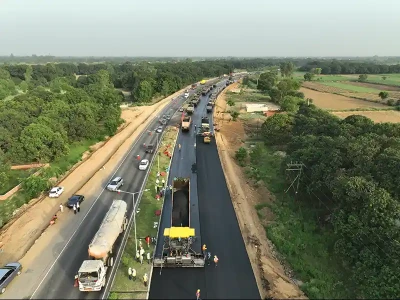
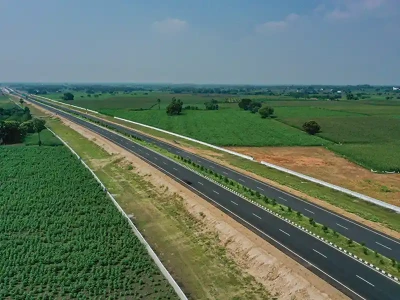
Technology adoption is never easy. It can even be perceived as being more expensive. But if you look at the pace of work earlier, constructing a one-kilometre stretch of road would take around 12 to 15 days as activities were carried out sequentially. Today, the same one-kilometre stretch can be completed in just 4-5 hours. This is the power of technology—it compresses timelines while simultaneously improving the quality of work.When OEMs introduce new technologies, the objective is to shorten project timelines and improve efficiency. Faster project completion directly helps customers optimise costs. At the same time, machine productivity has increased dramatically. Tasks that earlier took six hours can now be completed in just 20 minutes, resulting in substantial cost savings.
Let me give you another example: in road construction, the NHAI regularly inspects road quality, however, given the large scale of roads being constructed across the country, it is impossible to deploy inspectors at every site every day. Inspections therefore happen at intervals, and once a particular layer of construction is completed, it becomes difficult to assess what was done underneath. This creates a serious challenge. We often see roads getting damaged soon after construction when shortcuts are taken or quality is compromised.
To address this, we introduced technology in our machines that records data layer by layer as construction progresses. This data cannot be altered or tampered with, and NHAI can access it remotely 24/7 even when the machines are in operation. Even six months later, if there is a problem, the data clearly identifies which layer was not executed properly. The technology also enables construction to continue round the clock, without the need for daylight.
When we first introduced this technology, customers felt it was prohibitively expensive and questioned the need for it, believing that existing processes were sufficient. We then worked with the Ministry of Road Transport, NHAI, and other stakeholders for nearly two years. We provided this technology on the Lucknow–Kanpur Expressway free of cost. When the Hon’ble Minister visited the site and reviewed the results, the government decided that going forward, Indian roads would be constructed using such technologies. Today, there are many players offering similar solutions.
This single technological intervention has transformed the ecosystem. In India, roads are built by contractors and later monetised or sold to investors such as pension funds. These investors need assurance on construction quality—whether the asset will last or develop issues like potholes within a few years. With access to this data, they now have complete visibility and confidence. This also significantly reduces long-term maintenance costs.
Building on this, we are now introducing advanced road maintenance equipment as well. Pension funds and infrastructure investors have approached us, seeking solutions that enable efficient road maintenance with minimal manpower. This is where technology plays a crucial role.
In summary, a single technology—introduced initially to monitor construction quality—has ended up benefiting contractors, regulators, investors, and end-users alike. This is how meaningful technology adoption strengthens the entire infrastructure ecosystem.
Do you offer refurbished machines to mid-sized contractors or subcontractors who want to upgrade and for the price-conscious buyers?
We retrofit old machines with the latest technology. Customers can opt for refurbished machines or they can go for a rental model. Our objective is not to increase their financial burden, so, our focus is on optimising costs, reducing their overall load, and making their operations more economical. When our customers succeed in their business, that success naturally comes back to us. This is how we creating long-term, sustainable partnerships.No doubt, India is a very price-sensitive market. When Caterpillar wanted to introduce new products in India, initially, it was important for them to keep in mind factors such as affordability, faster product introduction, availability of locally produced engines like Ashok Leland, which were already tuned to Indian operating and climatic conditions.
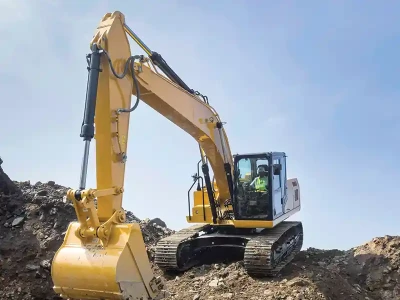
However, things have changed: the three medium excavators recently introduced by Caterpillar are all equipped with CAT engines. In fact, Caterpillar is no longer using any other engines in this segment. This is significant because Caterpillar is the world’s largest diesel engine manufacturer.
In hindsight, Caterpillar may have opted for local engines earlier because they were already tuned to Indian conditions and allowed quicker market entry. And Caterpillar would never introduce a product unless it was 100% confident about its performance and reliability in India. Today, after extensive testing and validation, Caterpillar is confident in deploying its own engines across its product range in India.
How can the CE Industry move towards a cleaner and more sustainable environment?
Customers should embrace technology — not only because of advancements in technology, but also due to the country’s environmental requirements. The government has made its intent very clear: India must move towards a cleaner and more sustainable environment. When we look at the air quality challenges faced by cities like Delhi, the need for cleaner technologies becomes even more evident. Electronic engines are a step toward greater efficiency, reliability, and sustainability.New technology does not mean higher maintenance costs; rather, it is the responsibility of OEMs to ensure that customers are not burdened with additional maintenance costs. In the automobile industry too, the maintenance cost has actually come down—and the same will happen with the material handling systems that we are now producing.
Published on:
11 February 2026
Published in: NBM&CW FEBRUARY 2026
Share:
We Value Your Comment