Trimble Empowering India’s CE Industry With End-to-End Delivery of Technology
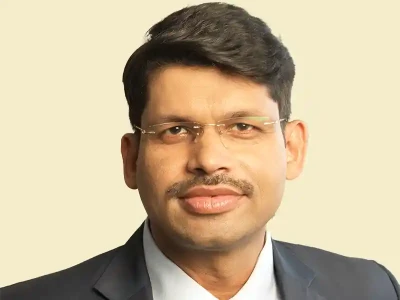
John Whitehead, Vice-President, Sales, APAC Field Systems, Trimble, emphasises the impact of technology in meeting demand for critical infrastructure development and speeding up construction, leading to faster ROIs.

What easy-to-adapt technology does Trimble offer to India’s CE industry?
Technology adoption will alleviate many problems such as planning culture gaps, fragmented contracting, skill shortages, and data silos. At Trimble, one of the reasons India has been established as a primary engineering hub is the presence of over 2,000 Trimble employees in the country, most of whom are engaged in engineering and R&D. This footprint is being leveraged to deploy solutions for the local market by combining local context, domain expertise, and strong engineering talent.A system that is entirely made in India by the engineering team has been released for machine control, referred to as AIMC. Gradually, efforts are being made to make technology more accessible to this highly fragmented industry. It is important to meet the industry where it is, rather than offering solutions that are beyond the threshold of what can be adopted immediately.
The need is acute. There is strong demand for infrastructure such as roads, railways, and airports, along with a significant backlog of infrastructure development in the country. It is well understood that the faster technology is deployed, the more impactful it will be. Therefore, the focus remains on creating localized solutions that draw on more than 40 years of industry domain expertise while addressing local conditions.
In what ways does Trimble’s Digital Twin solution help contractors?
BIM, as it is practiced today, remains largely within the digital world. Trimble’s core competency lies in taking the digital twin and digital design into the real, physical world—capturing data on what is built against the design and then bringing that information back into the digital environment.Trimble is uniquely positioned to do this because of its origins in the field. The company brings more than 40 years of domain expertise in surveying, geospatial technologies, machine control, and several other areas, which are combined with the need to feed real-world physical conditions back into the digital realm. This is achieved through cloud solutions, software, and field-based sensors.
From Trimble’s perspective, a digital twin is about truly pairing the digital and the physical—not just creating something in the digital world that looks good but falls apart during the construction phase because the tools to transfer that digital content into the field are missing. This is where Trimble is well positioned to make a meaningful impact on the industry, especially in India.
Please tell us about Trimble’s subscription-based model that enables less capital-intensive and faster adoption of technology by contractors?
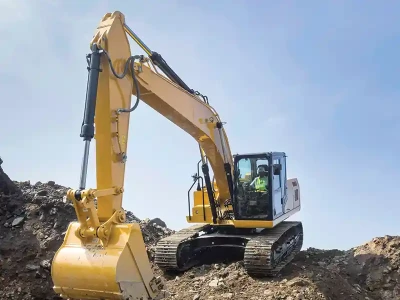
In the construction and infrastructure context, AIMC refers to technology that uses digital design data, sensors, GNSS, and automation to guide construction machines—such as excavators,graders, dozers, and pavers—with high precision. AIMC is still very nascent in the market, and there is considerable concern, largely stemming from a lack of exposure to the technology.A more localized solution has therefore been developed, along with the introduction of a business model that makes adoption far more affordable for contractors. A subscription-based model is being implemented that allows contractors to spread the cost of technology adoption over the course of a project, rather than incurring a large upfront capital expenditure and then depreciating it. This upfront cost has been a barrier to entry for the construction industry worldwide, not just in India.
For years, technology penetration in construction has been relatively low compared to other industries such as manufacturing. One of the main reasons is that construction is highly capital-intensive, making companies sensitive to paying for technology upfront. The objective is to provide a business model that aligns with contractors’ cash flow and financial constraints.
This approach is increasingly being rolled out in the civil construction market—shifting machine control from a large upfront capital expense to a subscription model spread over year one, year two, and year three, thereby extending the benefits across the duration of the project.
What simplified interface has Trimble created to bring contractors, subcontractors, and vendors engaged in multiple projects onto a single platform?
Going back to the digital-to-physical workflow, this is a key component of the market offering. Data is operated and moved between contractors and all project stakeholders through the cloud platform Trimble Connect. A platform is being created that enables third-party software providers to transfer their digital content into the field via Connect, where it can then be interpreted and utilized through field solutions.For projects with multiple or fragmented contractors, all that is required is access to Trimble Connect to pull and push data back and forth within the project. A general contractor can use it as the central platform for all digital information across the project. This provides an efficient solution for transferring data from one contractor to another, or from a general contractor to a subcontractor, and so on.

Do you see a significant shift in the mindset of contractors in India from manual to mechanical to use of technology?
Right now, what is driving technology adoption is the urgent need to construct faster while maintaining higher quality. Contractors are realizing that technology is essential to achieve both speed and precision.Machine control is a significant part of this shift, but another critical aspect is the adoption of a digital model for the project. In conventional construction, both in this country and elsewhere, a lot of manual effort goes into deploying the design across a project. With Trimble’s products, we are eliminating much of that manual work and enhancing overall productivity.
This represents a major shift in contractors’ mindsets. They are beginning to see that they can work in the digital realm—they no longer need to rely on paper, Excel spreadsheets, or other rudimentary methods to communicate data to the field. This is a very positive development for the market.

What measurable impact is digitisation having on a project’s ROI?

The Construction Digital Twin Feedback Loop
The second component is the digitization of everything—taking the digital twin back and forth between the digital and physical worlds. Finally, although it is influenced by many factors such as quality and material savings, the speed at which projects can be delivered is the most significant factor. Contractors want to be paid faster so they can move on to the next project, making this a major component of the ROI.
How is Trimble’s end-to-end delivery of technology empowering India’s CE market?
We have around 2,000 employees in India, giving us a strong core in engineering, product support, and related capabilities. A major part of our strategy is partnering with OEMs in the market. Trimble has a long-standing history of such collaborations—for example, much of our machine control R&D and products come from a partnership with Caterpillar, which has been thriving for over 20 years.We also actively collaborate with local OEMs, whether they are multinational manufacturers operating in India or indigenous companies. This allows technology to be delivered seamlessly at the point of sale. For instance, if a customer visits an OEM’s yard requesting a compaction machine with AIMC technology, the OEM can provide the complete solution—machine and technology integrated.
This approach is central to our go-to-market strategy. We can leverage our distributors’ deep expertise in the digital-to-physical workflow, while also enabling OEMs to offer a fully integrated solution to their customers. Essentially, we can do both –– empowering the market with flexible, end-to-end delivery of technology.
Published on:
11 February 2026
Published in: NBM&CW FEBRUARY 2026
Share:
We Value Your Comment